Wind Damage to Your Roof
Wind damage rarely looks like missing shingles. It breaks the seal, the shingle drops back into place looking perfectly normal, and the roof arrives at hurricane season already compromised.
Call 832-662-4107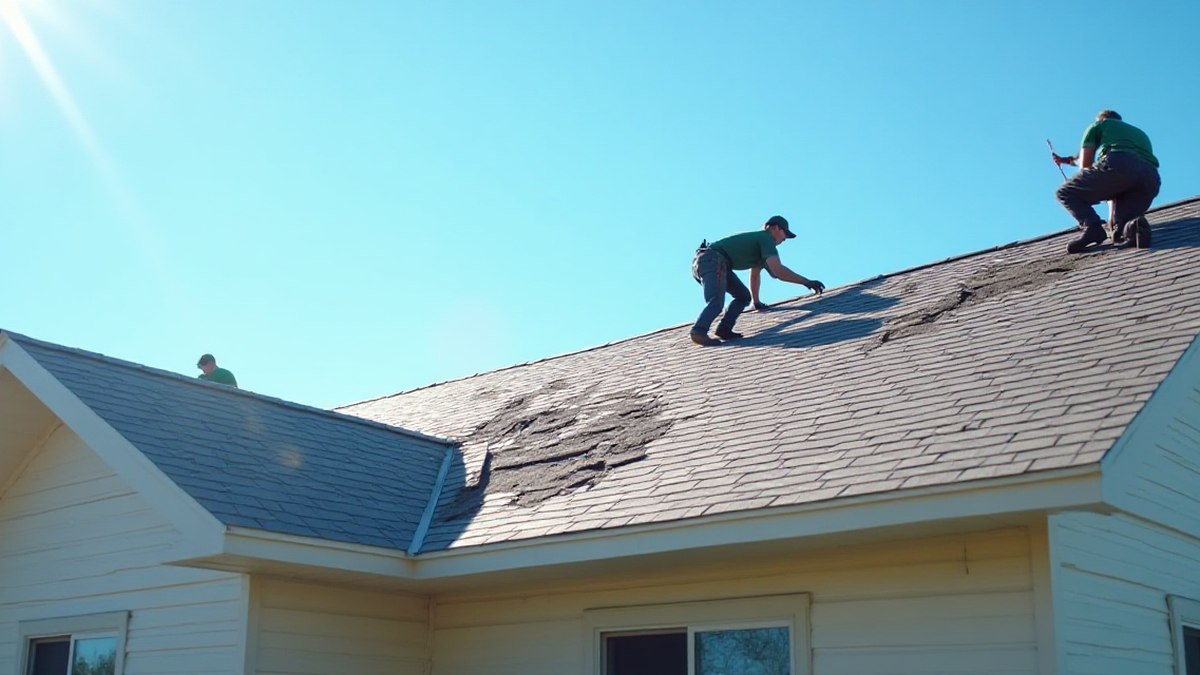
Wind damage usually leaves the shingle in place
People expect wind damage to look like missing shingles, and sometimes it does. More often it does not, which is why it goes unnoticed for years.
Asphalt shingles hold down with a self-sealing adhesive strip that bonds in the heat after installation. Wind gets under the edge and breaks that seal. The shingle drops back into place and looks perfectly normal — but it is no longer sealed, so wind-driven rain runs underneath it and the next strong gust lifts it further.
This is the difference between wind damage and hail damage that matters most: hail leaves marks you can photograph, wind often leaves a shingle that looks fine and is not attached. An inspector has to lift shingles by hand to find it.
Where wind hits first
| Location | Why |
|---|---|
| Ridge and hip caps | The highest and most exposed point. Almost always the first to lift |
| Roof edges and rakes | Wind catches the lip and peels inward |
| Corners | Wind accelerates around them, creating uplift far stronger than the general wind speed |
| The slope facing the prevailing wind | In a Gulf storm that is usually the south and east faces |
| Anywhere already lifted | Damage compounds. One unsealed shingle gives the next gust a handle |
How to check without climbing
- Look along the ridge line from the ground with binoculars if you have them. Caps should sit flat and even. Any that look raised or crooked are lifted.
- Look at the roof edges in raking light — early morning or late afternoon. Lifted shingles cast a shadow line that midday sun hides.
- Walk the perimeter after any storm and look for shingle pieces or granule piles in the beds and on the driveway.
- Check the attic after wind, not just after rain. Daylight at the edges means something moved.
Why Houston wind damage is underestimated
Most people here associate roof damage with hurricanes, so a routine thunderstorm gust does not register as an event. But shingle seals fail at wind speeds far below hurricane strength, and the Gulf Coast gets those regularly.
The damage is cumulative. A seal broken in a spring storm does not repair itself, and the roof simply arrives at hurricane season with a section already unsealed and waiting.
Insurance and wind
Wind is a covered peril on standard Texas homeowner policies, usually bracketed with hail under the same deductible — often a percentage of dwelling coverage rather than a flat amount. Check which yours is before filing.
The documentation problem with wind is harder than with hail. There is frequently no visible mark, so the claim rests on an inspector lifting shingles and demonstrating that the seals are broken, plus a wind record for the date. Photographs of the lifted shingle in the act of being lifted are what make the file.
Repair or replace
Scattered lifted shingles on one slope are usually repairable, provided matching material is available. Widespread seal failure across multiple slopes is a replacement, because there is no practical way to reseal a whole roof and no warranty that would cover the attempt.Call 832-662-4107